
TOYOTA CAMRY BRAKE REPAIR SERVICES
CAMRY
 We’re a top rated local Toyota Camry Brake repair services shop in Fremont, CA. In addition, we service the greater East Bay Area, which includes Newark, Union City, Milpitas, and Sunol. Most Camry owners in Fremont know their car well enough to feel when a stop takes a little longer or the pedal does something new. The car still starts, still runs, still looks fine, so it is easy to ignore that small change. At Fremont Foreign Auto in Fremont, CA, we treat those first small changes as real data, not background noise. Your Camry’s brake system almost never fails suddenly; it sends hints long before anything serious happens.
REQUEST A CALLBACK
Get Started
Full Synthetic Oil Change
Motor oil and the parts needed for your oil change vary in price from vehicle to vehicle. Please call for an exact price quote for your vehicle make and model. Our technicians are trained to service just about every make and model vehicle, from engine repair to oil changes.
Our technicians are highly skilled and experienced with just about every vehicle make and model. If your check engine light is on, you can bring it to our shop and we'll diagnose what's wrong with it. Any authorized diagnostic will be applied toward the cost of your repair, a $200.00 value.
 Front Pad Wear On Real Fremont Streets
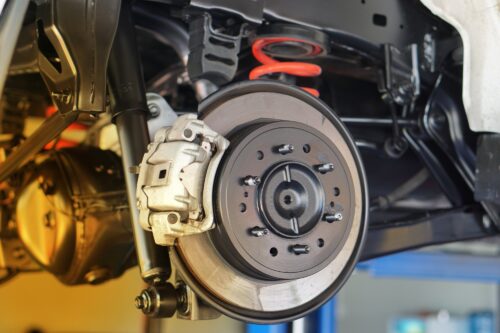
Toyota Camry front brakes carry most of the braking load, especially during downhill ramps and crowded traffic near major intersections. Over time the front pads wear down, harden from heat, and lose some initial bite on the first pedal press. You might feel the car roll a little farther at low speed or hear a dull scrape just before coming to rest. When we inspect a Camry, we check pad thickness, edge taper, shim condition, and how smoothly the pad moves in the bracket. Those details tell us whether you need pads now, soon, or just regular monitoring.
Rotors That Remember Every Hard Stop
Rotors on late model Camrys record every panic stop, long downhill grade, and repeated slow merge. Heat does not always bend them visibly, but it does create high and low spots that you feel through the wheel during braking around forty miles per hour. We measure runout with a gauge, check for thickness variation, and read the color patterns on the rotor face, which reveal how the metal has been treated by heat. If the measurements fall outside spec, we discuss whether machining or replacement makes the most sense for your driving.
Rear Brakes Doing Less Than Their Share
On older Camry models with rear drum brakes, problems rarely show up as squeals or grinding; they show up as a longer pedal and busier front brakes. A stuck adjuster or glazed shoe means the rear system is coasting while the front does the heavy lifting. We pull the drum, measure lining depth, clean and free the adjuster, and check the drum surface for heat marks. Bringing the rear brakes back into the game shortens stops and reduces how hard the front has to work every day.
Caliper Slides That Stick Under Fremont Heat
Caliper slide pins on Camrys live right where moisture, heat, and road grime like to collect. When those pins seize, the pad rides the rotor longer than it should, cooking one corner and wearing one pad far faster than the other. Drivers sometimes smell hot brake material after parking or feel a slight pull under harder stopping. In the bay, we remove the pins, clean the bores, examine the rubber boots for tears, and use high temperature lubricant that holds up in heavy traffic. Free slides mean even pad wear, cooler rotors, and steadier pedal response.
ABS And Wheel Speed Data That Actually Match Reality
Camry braking depends heavily on accurate wheel speed information, especially in wet weather or on loose surfaces. A failing wheel speed sensor can trigger traction lights, uneven low speed pulsing, or a system that feels like it intervenes at the wrong moment. We hook up a scan tool, watch each wheel’s signal while driving, and visually check sensor rings for cracks or missing segments. Once the faulty sensor is replaced, the ABS system stops guessing and starts reacting correctly again.
Fluid Level, Pedal Feel, And Hidden Leaks
Brake fluid does not evaporate; it either drops because pads have worn or because there is a leak somewhere in the hydraulic system. A Camry driver might notice a warning light after a long stop or a pedal that sinks slightly when held at a light. We inspect all lines and hoses, examine calipers and wheel cylinders, and perform a controlled pressure test on the master cylinder. If we find a leak, we show you exactly where it is and explain the consequences of waiting.
Noise That Points Straight To Glaze And Lost Grip
High pitched squeals under light braking on a Camry rarely mean “it is fine, just noisy.” They usually point toward glazed pads or rotors, where heat has hardened the surface and reduced real friction. We examine pad faces, rotor textures, and contact patterns to see whether the surfaces can be cleaned up or must be replaced. Afterward, we bed the pads correctly so the friction layer matches how you actually drive in Fremont.
Let Your Camry Stop The Way It Was Built To Stop
If your Camry feels different when you slow down, that is enough reason to have someone who knows these cars look closely. At Fremont Foreign Auto in Fremont, CA, we combine test drives, measurements, and real explanations so you understand exactly what your brakes are doing today. Call (510) 793-6067 to schedule a Camry brake inspection and keep your next hard stop predictable instead of hopeful.