
Fuel Pump Replacement REPAIR SERVICES
Fuel Pump Replacement
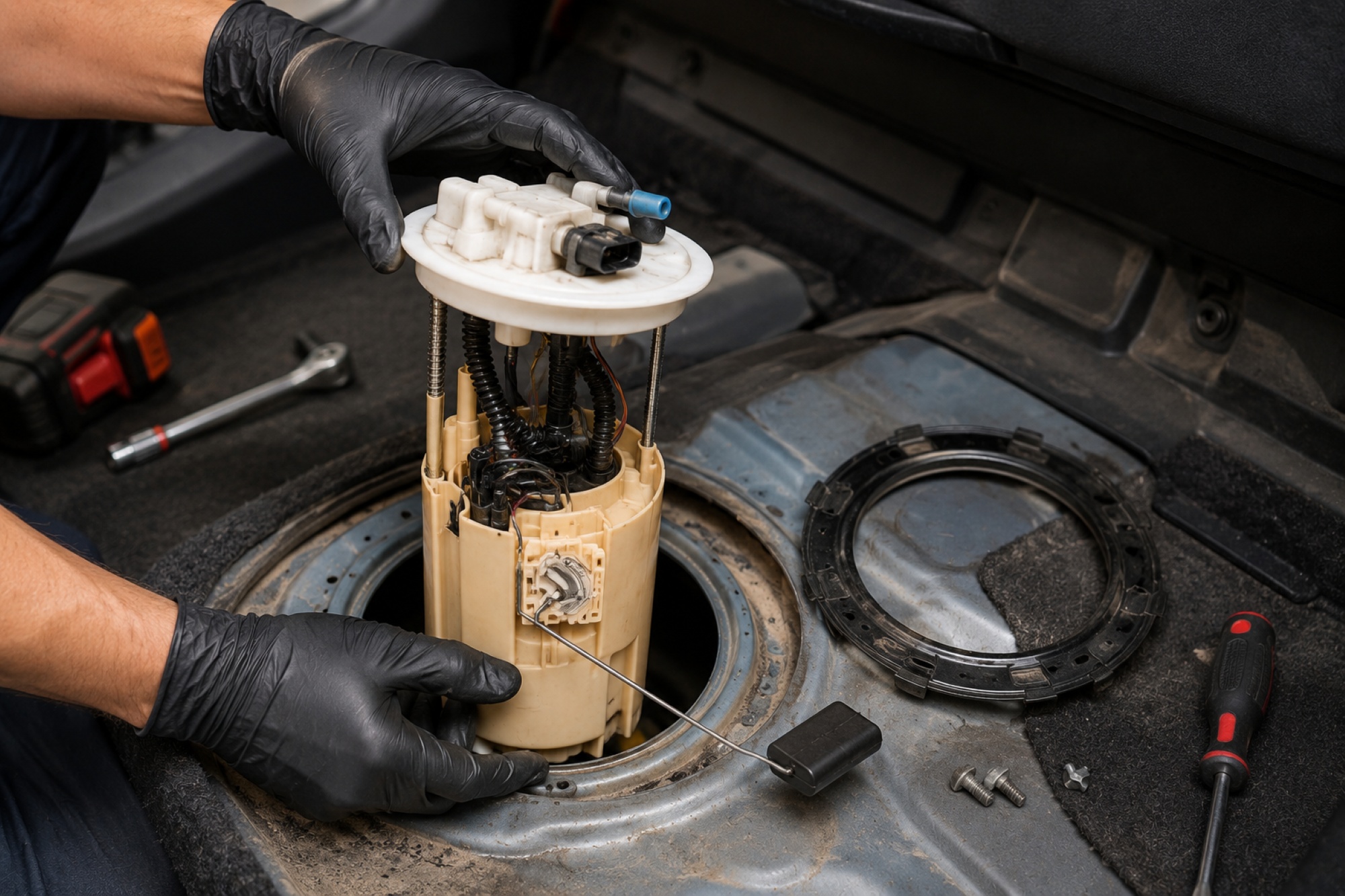
A failing fuel pump rarely quits without notice. The car sends signals over weeks, sometimes months, and the owners who pay attention to those signals get a planned appointment instead of a tow off the freeway shoulder. Hard starts in the morning, a whine from the back of the car, an engine that hesitates under acceleration, misfire codes that ignition repairs don’t solve, and certain electronic faults on newer cars all point to the same answer well before total failure. Fremont Foreign Auto in Fremont, CA replaces fuel pumps on almost every European make we service, and the diagnostic process stays consistent across them: pressure testing, listening, and load-testing the system to confirm where the weakness lives. The five situations below cover the warning signs that bring most owners in before the breakdown they were trying to avoid.
REQUEST A CALLBACK
Get Started
Full Synthetic Oil Change
Motor oil and the parts needed for your oil change vary in price from vehicle to vehicle. Please call for an exact price quote for your vehicle make and model. Our technicians are trained to service just about every make and model vehicle, from engine repair to oil changes.
Our technicians are highly skilled and experienced with just about every vehicle make and model. If your check engine light is on, you can bring it to our shop and we'll diagnose what's wrong with it. Any authorized diagnostic will be applied toward the cost of your repair, a $200.00 value.
Hard Starting After the Car Has Been Parked Overnight
A healthy fuel system holds residual pressure long after the engine is shut off, so the next start fires almost instantly. When the pump’s internal check valve weakens, fuel pressure bleeds back into the tank overnight, and the engine has to rebuild pressure before it can fire on the next attempt. The symptom is a longer-than-usual crank in the morning that improves through the day once the system has been running. We measure rest pressure with a fuel pressure gauge and watch the decay rate over time, which separates a leaking check valve from a leaking injector or a tired pressure regulator.
A Whining Noise From the Rear of the Car
Most European fuel pumps sit inside the fuel tank, where the surrounding fuel insulates the motor noise from the cabin. A pump motor and impeller worn enough to produce audible whining outside the cabin is a pump that has limited time remaining on the road. Owners often describe the sound as a steady electrical hum that gets louder as the tank empties, since less fuel means less sound dampening between the pump and the body of the car. Catching the pump at the whining stage gives the owner the planned replacement before the pump quits during a longer drive away from home.
Engine Cutting Out at Highway Speed or Under Acceleration
A weak pump can deliver enough fuel volume for idle and low-load cruising while failing to meet demand under acceleration, hill climbs, or sustained high-RPM running. The car runs fine around town and stumbles, hesitates, or briefly stalls when the engine asks for more fuel than the pump can move. We test fuel pressure during a road test with the gauge mounted in view, not just at idle in the service bay, because the failure mode only shows itself under the same conditions that produced the original complaint from the driver.
Misfire Codes That Don’t Trace Back to Ignition Components
Inconsistent fuel pressure creates lean conditions that the engine reports as misfires, and the codes look identical to ignition-related misfires from coils or plugs. Shops that chase the codes by replacing ignition parts end up with new coils, new plugs, and the same misfire still logging on the scan tool. We rule out fuel pressure issues before touching any ignition component, because the diagnostic takes minutes with a gauge and saves the customer from buying parts that aren’t the cause behind the recurring code.
Fuel Pump Driver Module Failure on Newer Platforms
Certain Audi, BMW, Porsche, and Volkswagen vehicles use a fuel pump driver module that controls pump speed by engine demand instead of running the pump at a constant voltage. On certain platforms within those brands, the driver module is the more common point of failure rather than the pump itself, and the symptom is a crank-no-start or sudden stall with no fuel pressure registering at the gauge. Replacing the pump on a car with a failed module wastes the part and the labor, since the new pump won’t run without functioning power from the module. We test the module’s output and the pump separately so the right component gets replaced.