
Brake Rotor Replacement REPAIR SERVICES
Brake Rotor Replacement
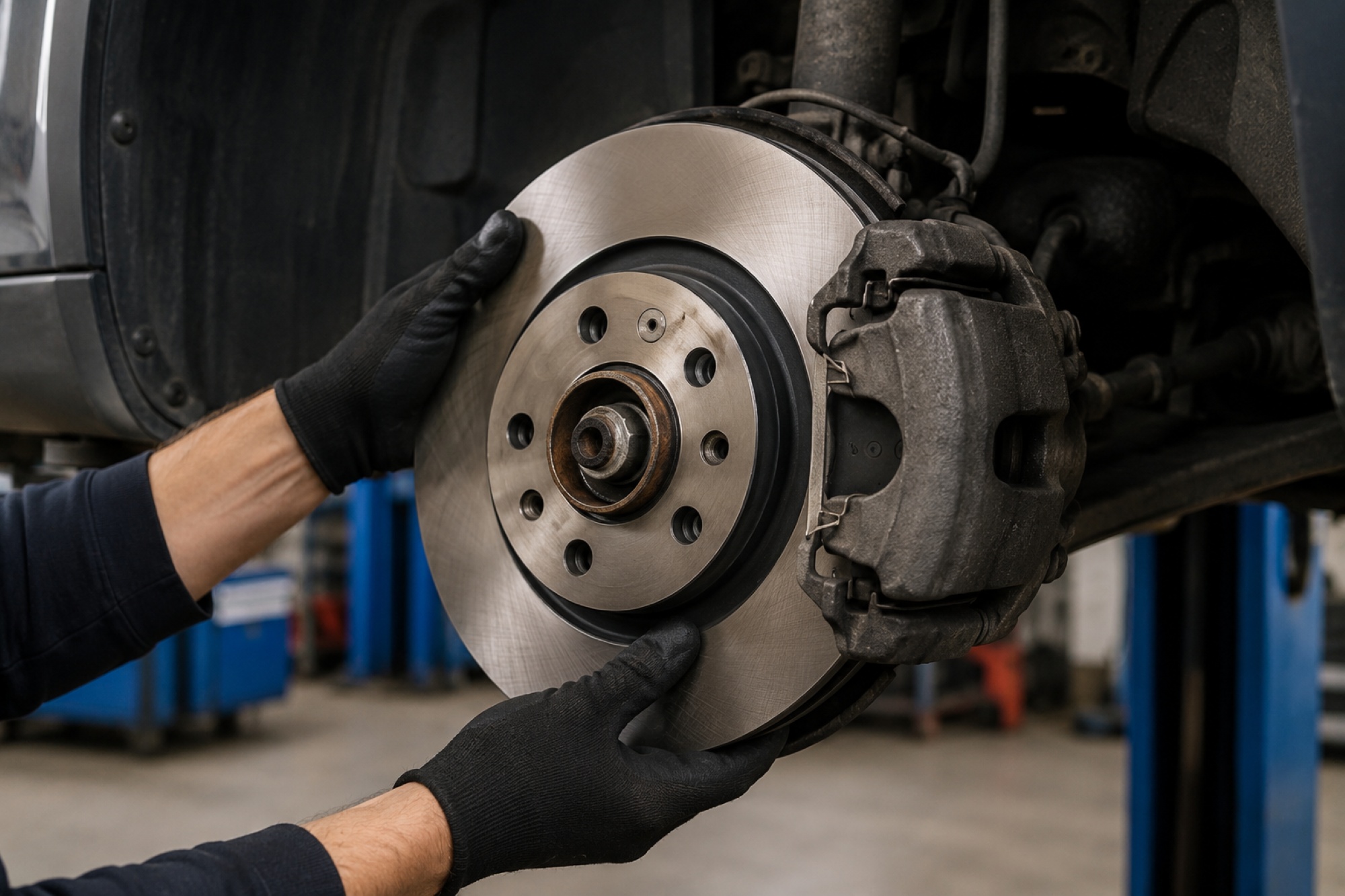
Every brake rotor on a European car comes from the factory close to its minimum allowable thickness, which means the resurfacing tradition that worked on older American cars rarely fits the platforms we service. Rotors on BMWs, Mercedes, Audis, Porsches, Volvos, and Volkswagens are engineered as replacement parts, and the manufacturer’s minimum thickness specification is stamped right on the rotor itself for verification at every brake service. Fremont Foreign Auto in Fremont, CA evaluates rotors against that stamped specification rather than against a guess from across the bay, because measurement moves the conversation from opinion to engineering.
REQUEST A CALLBACK
Get Started
Full Synthetic Oil Change
Motor oil and the parts needed for your oil change vary in price from vehicle to vehicle. Please call for an exact price quote for your vehicle make and model. Our technicians are trained to service just about every make and model vehicle, from engine repair to oil changes.
Our technicians are highly skilled and experienced with just about every vehicle make and model. If your check engine light is on, you can bring it to our shop and we'll diagnose what's wrong with it. Any authorized diagnostic will be applied toward the cost of your repair, a $200.00 value.
Pedal Pulsation That Builds With Brake Pressure
A pulsing brake pedal during slowdown points to thickness variation across the rotor face, which the brakes translate into a rhythmic push-back through the pedal and the steering wheel. The traditional explanation is rotor warping from heat, and warping does happen on European cars. The more frequent cause we measure on the lift is uneven pad material transfer, where heat cycles have deposited pad material in patches across the rotor face instead of evenly, producing thickness variation that feels identical to warping but comes from a different mechanism. Either way, the rotor surface no longer presents a flat, consistent face to the pad, and replacement restores smooth braking.
Rotor Thickness at or Below the Stamped Minimum
A rotor measured below its minimum thickness specification can’t be returned to service regardless of how it looks. A thin rotor can’t dissipate heat the way the engineer intended, which leads to brake fade on long descents and warping under hard repeated stops. We measure with a micrometer at multiple points around the rotor face and at the thinnest cross-section we can find, because thickness varies across a worn rotor and the lowest measurement determines whether the rotor stays or goes.
Heat-Cracked Surface From Hard Use
Rotors subjected to extreme thermal stress (long downhill braking, towing close to vehicle capacity, repeated emergency stops, or sustained mountain driving) develop heat checking, a network of fine cracks across the rotor face that resemble a spider web. The cracks start shallow and grow with continued use, and a heat-checked rotor under enough stress can fail at the worst possible moment. We replace at the first sign of heat checking rather than waiting to see how far the cracks will spread, because the cost of waiting is measured in safety rather than dollars.
Worn Lip From Pad Backing Plate Contact
When brake pads wear past their useful life and the driver keeps going, the metal backing plate of the pad eventually makes direct contact with the rotor face. The contact cuts a groove around the outer edge of the rotor, leaves a raised lip on the rotor surface, and creates a profile that no new pad can seat against flat. New pads installed on a grooved rotor wear quickly, produce noise, and reduce braking effectiveness compared to a flat replacement rotor with matched pads. Replacement is the only path forward once the lip exists.
Rust Pitting From Storage or a Dragging Caliper
A car parked outside through wet weather, or stored for months with the brakes applying pressure to the rotors, develops surface rust that progresses into pitting where the corrosion goes deep enough to remove material. Light surface rust burnishes off within a few miles of normal driving. Pitting does not, and a pitted rotor face never returns to a smooth braking surface. Separately, a caliper that drags from a stuck slider or seized piston accelerates wear on one rotor and heat-damages it unevenly, which requires replacement of the rotor and repair of the caliper at the same visit.