California freeways and surface streets around the East Bay have something in common that most drivers never think about until their luxury SUV starts complaining. Expansion joints, pavement transitions, and concrete seams appear at fairly consistent intervals across the I-880 and 680 corridors, and at typical city and onramp speeds between twenty and thirty-five miles per hour, those intervals load the suspension with a rhythmic vertical input.
A healthy Porsche suspension absorbs that input without saying a word. A Porsche suspension with one worn bushing reveals itself the moment the rhythm starts, because every single seam becomes a hammer hitting the same weak spot over and over again. The Bay Area pavement pattern acts like a diagnostic test the driver never asked for, which is why Union City Porsche owners keep bringing Cayennes, Macans, and Panameras to Fremont Foreign Auto in Fremont, CA for the same clunk conversation.
Rubber Bushings Take The Hit, Shocks Get The Blame
A clunk over pavement seams almost never comes from the shock absorber itself, even though the shock is the loudest-sounding part of a suspension on paper. The clunk comes from a rubber or polyurethane bushing that has separated from its steel sleeve and is knocking against the housing every time the suspension cycles. At our shop, a technician rides in the passenger seat during the road test and listens for the clunk, because it tracks to one specific corner and one specific bushing rather than the whole suspension.
Upper Control Arm Bushings Go First On Cayenne And Macan
The upper control arm on a Porsche Cayenne or Macan holds a pair of rubber bushings that take most of the vertical impact from pavement seams, and those bushings are the ones that usually give up before anything else on the suspension. A visual check with the suspension unloaded on a lift shows the bushing separating from its steel sleeve, which is a failure that cannot be tightened back into place. The fix is a full arm replacement, because Porsche does not sell the bushing alone on most model years. The clunk from a separated upper control arm bushing typically appears on one side of the car first because the bushings never wear evenly.
Sway Bar End Links And PASM Top Mounts Come Next
The sway bar end link ball joints carry lateral load every time the body rolls against the stabilizer bar, and they wear from the same pavement rhythm that took out the control arm bushings. PASM adaptive shock top mounts can crack from years of heat cycles and produce a clunk at the top of the strut tower rather than down at the wheel, which confuses some shops into replacing the shock. The real failure lives at the top mount, and swapping a shock will not quiet the noise.
The Pry Bar Test That Names The Guilty Corner
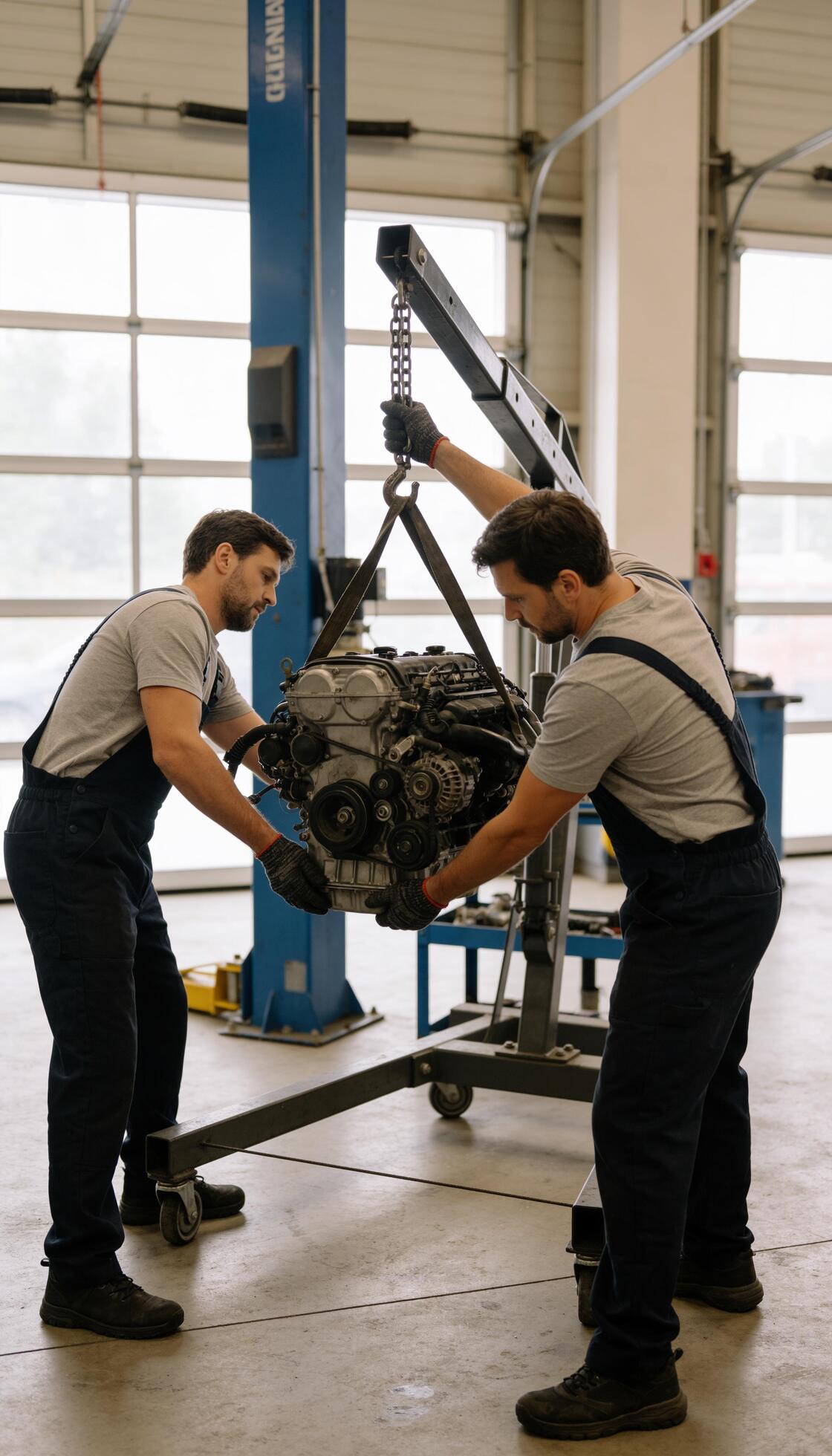
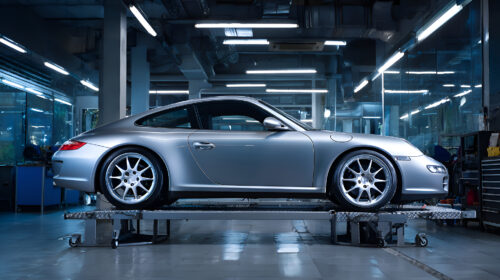
Before any parts get quoted, a technician should load each suspension component with a long pry bar while the car sits on a lift with the wheels hanging free. Movement at the bushing or ball joint under pry-bar pressure is the proof that names the guilty corner, and without that test, a shop is just swapping parts in pairs and charging for both. Union City Porsche owners who want the clunk diagnosed by side and by component can dial (510) 793-6067, because a pry-bar inspection takes twenty minutes and saves the cost of replacing parts that were never worn out in the first place.