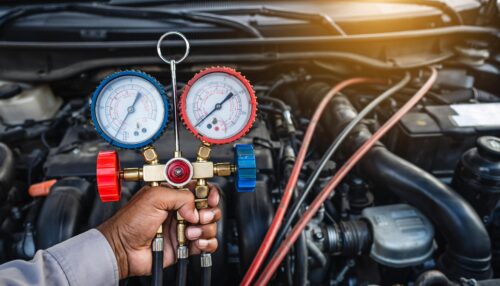

“The AC stopped blowing” covers 2 different failures, and the repair depends on which one you have. Either the vents stopped moving air, or the air keeps moving and comes out warm. On a GLE, the second version can mean a compressor in working order and a computer refusing to switch it on. Here in Fremont, CA, our crew at Fremont Foreign Auto tells those 2 apart for Newark drivers inside the first visit.
The 60-Second Test: Fan On Max
The test starts with the fan set to its highest speed and the engine running. Strong air at the vents that never turns cold sends the diagnosis toward the refrigerant side. Weak or missing airflow points at the delivery side instead. That single check rules out an entire branch before any gauge gets connected.
The Airflow Side: Blower, Filter, And Ice
A cabin filter packed with dust chokes airflow before the blower ever weakens, and the swap costs less than any other fix here. Behind the dash, the blower motor and its speed regulator age too; a fan that holds some speeds and drops others points there. Small electric actuators swing the flaps routing air through the dash; a stripped one sends air to the wrong vents or pins a flap shut. One airflow failure starts on the refrigerant side: a starved system lets the evaporator run below freezing. Moisture freezes onto it until ice blocks the duct, and airflow fades after 30 or 40 minutes. The pattern gives it away: airflow that quits on long drives and returns by morning has been icing over; melted ice leaves no trace to find.
Warm Air, Part 1: The Lockout Logic
Mercedes-Benz wired the climate control to protect the compressor, so the system checks refrigerant pressure before every engagement. Pressure reading too low means a leak has emptied the system, and running the compressor dry would grind it down in short order. A reading too high blocks engagement just the same, because an overfilled system strains the compressor from the other direction. Faults from outside the AC join the list, since a coolant temperature sensor reporting an overheat makes the car drop the compressor to spare the engine. Our XENTRY-level diagnostics show whether the compressor is even being commanded on, and that answer decides the whole repair path.
Warm Air, Part 2: Leaks And The Right Refill
The condenser hangs at the front of the GLE, ahead of the radiator, where freeway stones reach it first. A pinhole there bleeds refrigerant over months, and the cold fades so gradually that owners blame the heat wave instead. Dye and an electronic sniffer find the leak point; a refill without that search drains out on the old schedule. GLE production spans the W166 generation and the V167 that arrived for 2020. Across those years the factory refrigerant moved from R134a to R1234yf. Those 2 never mix in one system or one service machine. One label under the hood names which one your truck holds.
The Recharge Can That Causes The No-Cold Call
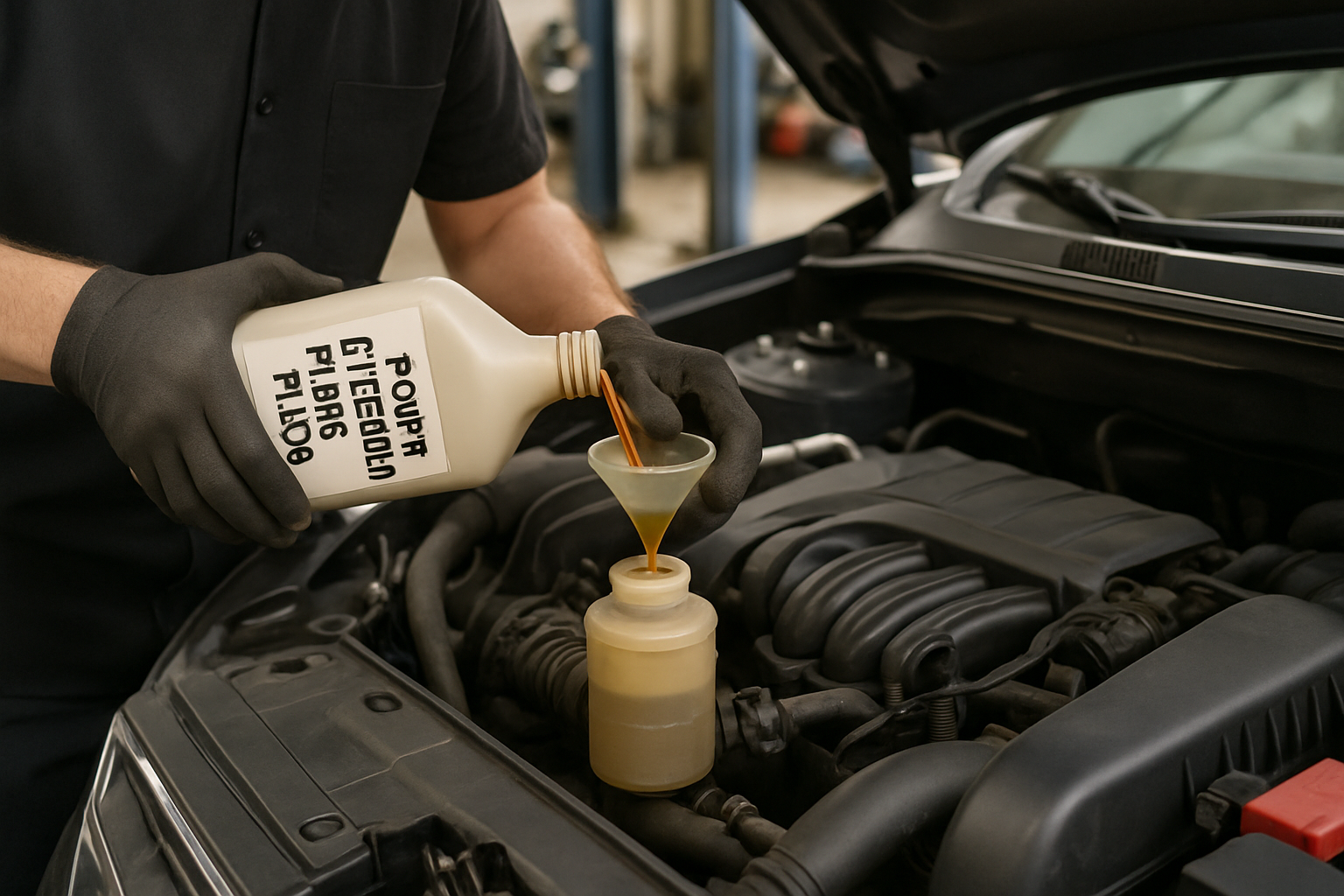
Parts-store recharge cans offer cold air in 10 minutes on the label. Plenty of them also carry a leak sealer in the mix. Sealer that cures inside the system can plug the expansion valve, the small metering passage the whole cooling effect depends on. It also contaminates recovery equipment, which is why a sealer test happens before our machine touches the car. One can emptied by feel pushes the charge past the limit; an overfilled system then trips the high-pressure lockout that keeps the compressor off. Our refill runs the opposite way: full evacuation, then a scale-measured charge matched to the figure on the underhood sticker. That loop turns the do-it-yourself fix into the reason the cold never returned. Step 1 of the repair becomes pulling every bit of the old charge back out.
The First Visit: Command Test, Then Estimate
Our first visit runs in a fixed order: fan test, command check, pressure reading, then the estimate. Parts go on the estimate only after the command check and the pressure numbers agree on a cause. Sealed-system work happens with the right machine for your refrigerant, whichever of the 2 your GLE holds. By pickup time you know which branch failed and why the cold will hold. When your GLE quits blowing cold this summer, call Fremont Foreign Auto at (510) 793-6067.