The first sign of an E-Class transmission losing its edge is usually a half-second of nothing when you press the gas from a stop. The engine revs, the car pauses, and the gear engages a beat later than it should. Most drivers notice this for weeks or months before they make the appointment, because everything else about the car still feels right. By the time the slip happens under load on a freeway merge, the conversation has shifted from maintenance to repair. Fremont Foreign Auto is based in Fremont, CA, serves Newark and the surrounding cities, and treats those early symptoms as the diagnosis they really are.
What’s Happening Behind That Pause
On 722.9 transmissions (the 7G-Tronic in W211 and W212 E-Class models), the conductor plate is the part that fails most often. The conductor plate is an electronic module inside the valve body, and it interprets every shift command the car’s computer sends. When it starts to wear or develop an internal leak at the connector seal, shifts get vague, harsh, or delayed before any warning light shows up on the dash. The driver feels the failure first; the diagnostic scanner confirms it second. We’ve seen the symptom progress over a single summer from “I think it shifts weird” to “I can’t trust it merging onto 880.”
The Fluid Mercedes Once Called Lifetime
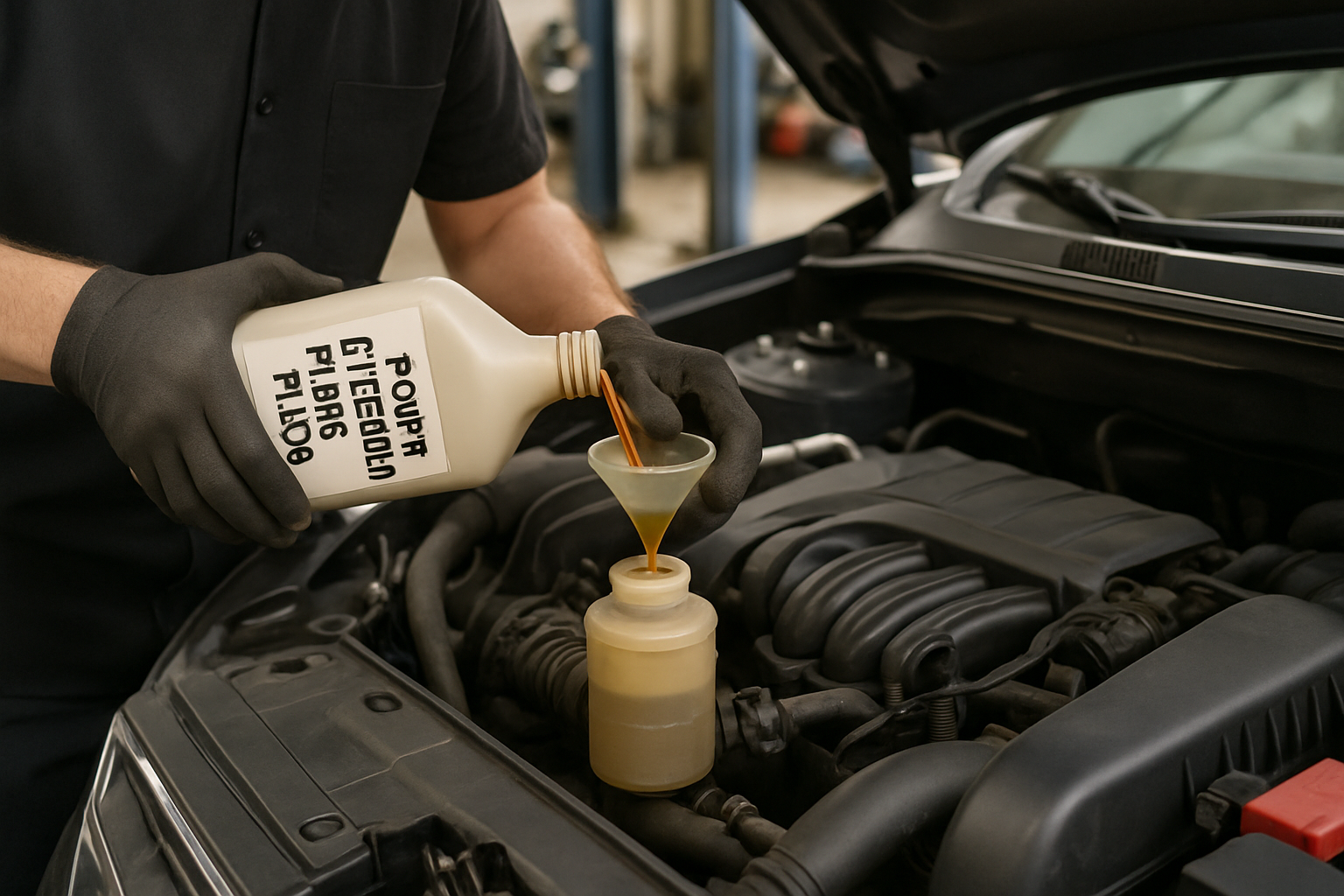
Mercedes labeled the 722.9 fluid sealed for life through the 2000s and into the 2010s. We’ve pulled fluid at 80,000 miles that came out the color of dark coffee instead of the red it should be, sometimes with a burnt smell that tells us the clutches have already taken heat damage. Independent shops now widely recommend fluid and filter service every 60,000 to 80,000 miles, and that single service prevents most of the conductor plate failures and valve body wear patterns we see on this transmission. The fluid loses its frictional properties over time, the additives break down, and the magnet in the pan starts collecting clutch material the fluid can no longer hold. Cars on a service schedule keep their transmissions long past the cars that aren’t.
Where a Repair Becomes a Rebuild
A failing conductor plate caught early is a contained repair that keeps the transmission itself intact and the surrounding components healthy. A transmission driven another 20,000 miles past that point usually has worn valve body bores, clutch material throughout the fluid, and damage that pushes the work toward a full rebuild or a replacement unit. Our diagnostic process includes a scan with Mercedes-capable software (not generic OBD), a road test under varying loads and shift points, and a pan drop to inspect the fluid color, the filter condition, and the magnet for metal debris. The combination tells us whether you’re looking at a repair or something larger, before any parts get ordered or any quote gets handed over.
The 9G-Tronic Has Its Own Pattern
W213 E-Class models with the 725.0 nine-speed transmission show a different early symptom. Torque converter shudder at cruise speeds between 45 and 55 mph is the most common first complaint we hear from drivers, often described as a fine vibration that feels like driving over rumble strips. Caught early, a fluid service using the correct MB 236.17 specification fluid resolves most cases without further repair. Caught late, the same shudder can damage the converter clutch and the valve body, which turns a routine service into a major job.
Pull In Before the Pause Becomes a Slip
If your E-Class is taking a beat to engage, shifting harder than it used to, or shuddering at cruise on the way to Newark, call Fremont Foreign Auto at (510) 793-6067. We’ll get the car on the lift, scan the transmission with the right software, and tell you honestly where it sits on the repair-or-rebuild line before any work begins.