
When Newark drivers first hear their car’s exhaust suddenly get louder, they often assume it’s a hole in the muffler or maybe a loose clamp. In truth, most exhaust leaks we see in our Fremont shop come from higher up in the system—manifold flange fractures, flex pipe splits, and internal weld failures that begin subtly before creating performance or safety problems. Modern vehicles from 2010 and newer use thin-wall stainless piping to reduce weight, but the trade-off is reduced tolerance to thermal expansion and corrosion, especially when driven short distances or under fluctuating load cycles. We always begin with a full cold-start pressure test, because many leaks disappear once the system heats up and expands.
Manifold Gaskets Fail Slowly but Carry Dangerous Consequences if Ignored
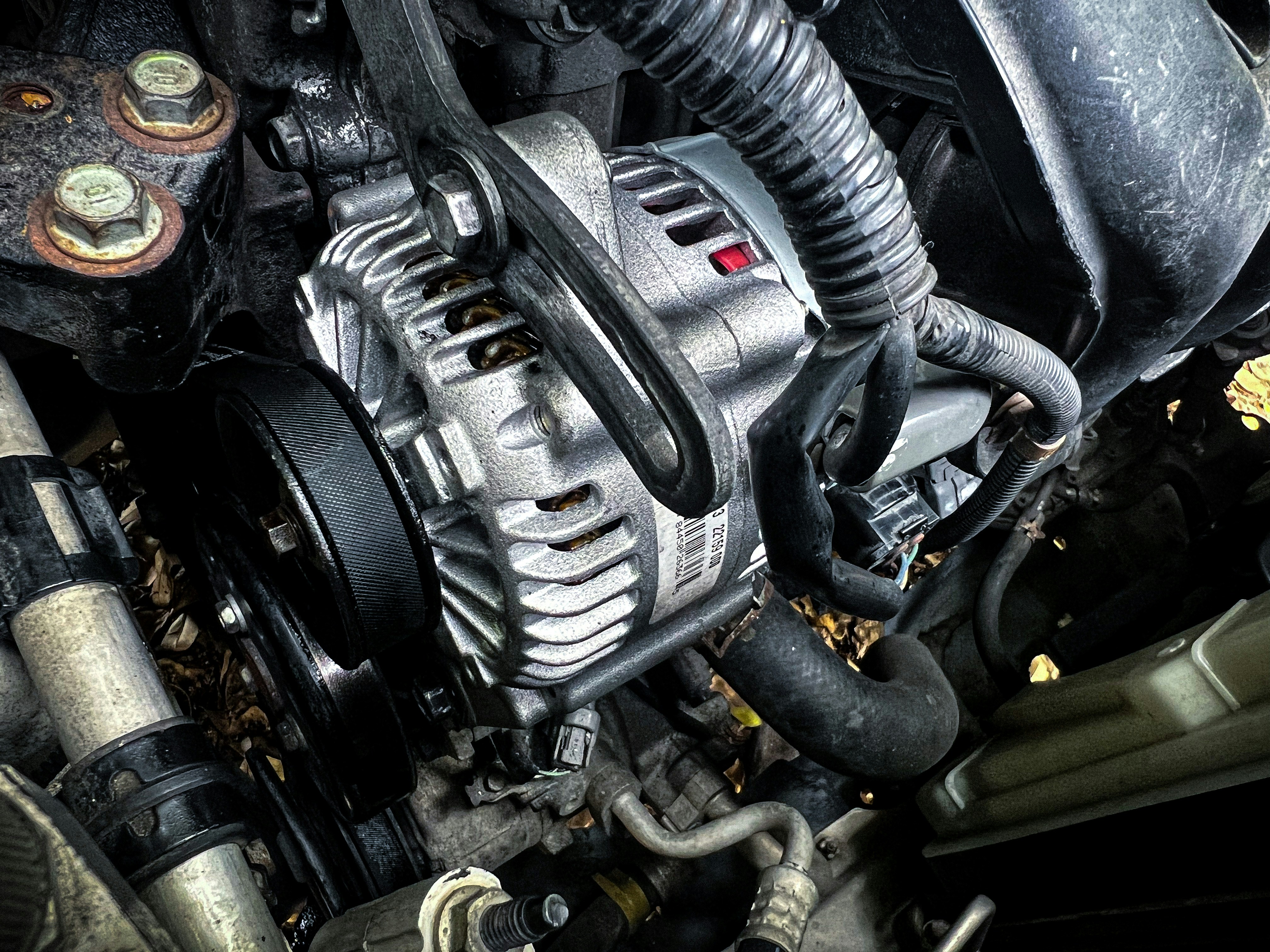
In cars like the 2011–2016 Hyundai Sonata and 2012–2019 Ford Focus, the exhaust manifold is integrated directly with the catalytic converter or turbocharger, and the gasket surface is subject to massive thermal stress with every startup and shutdown. Gaskets on these flanges lose torque clamping force over time as the fasteners expand and contract, which allows exhaust gases to escape directly near the engine bay. Drivers in Newark often smell exhaust inside the cabin without realizing the gasket is leaking near the HVAC intake. We identify this early with infrared thermal mapping during idle and scan for fuel trim compensation under load, which often reveals undetected leaks pulling in extra oxygen before the O2 sensor.
Flex Pipes Fail from Load, Not Just Age, Especially on Front-Wheel Drive Vehicles
Flex sections are designed to absorb drivetrain movement, but most shops miss how often torque load and worn engine mounts accelerate fatigue. We’ve replaced countless flex pipes on 2008–2017 Toyota Camrys, Nissan Altimas, and Honda Accords after verifying that engine torque steer had overstressed the braid, causing hairline cracks at the junction welds. Newark drivers often think the rattle under acceleration is a loose heat shield, but when we load the powertrain on the lift and cycle the throttle with brakes applied, the real damage shows itself. We replace flex sections with higher-tensile braided steel and reinforce hanger locations to control drivetrain movement during downshifts or hard acceleration.
Heat Shields Aren’t Cosmetic, and Rattles Can Signal Structural Separation
Exhaust leaks are sometimes hidden beneath rattling heat shields that have begun to detach from the pipe or muffler shell. In many 2009–2015 Subaru Foresters and Outbacks, the outer heat shield separates from the resonator or midpipe, trapping moisture and accelerating rust on the structural seams. Newark drivers often ignore this sound until they discover carbon streaks and stress cracks forming beneath the rattling section, indicating internal weld failure. We repair this by removing the shielding, verifying the extent of corrosion, and replacing the affected pipe with properly coated aftermarket or OE-grade components that resist water intrusion from road spray.
Exhaust Flange Rot Is a Hidden Threat on Older Imports and Midwestern Transplants
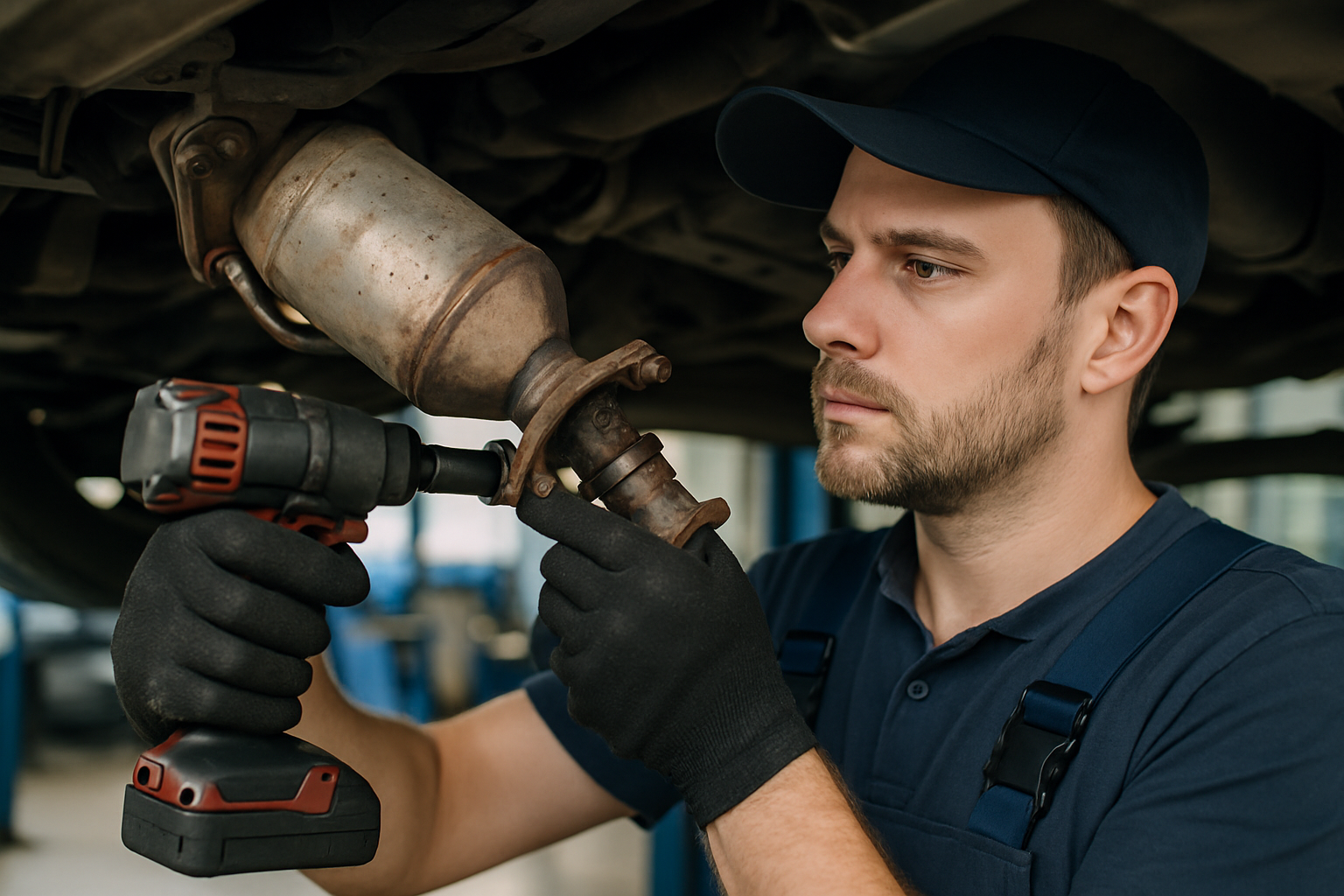
Any vehicle that’s spent even a few years in a high-moisture or salt-based climate is at high risk for exhaust flange rot, even if the rest of the exhaust system appears intact. We often find this issue on 2006–2013 Mazdas, older BMW 3-Series, and first-gen Scion tC models owned by Newark residents who relocated from the Midwest. The flange-to-pipe welds degrade from the inside, flaking out and leaking between the flanges while still appearing visually secure from the outside. We identify this by using smoke testers under pressure, watching for lateral gas escape between the flanges. Repair requires either complete flange replacement or a custom-fabricated sleeve and band clamp setup to preserve exhaust geometry without altering downstream sensor spacing.
Aftermarket Installations Often Introduce Points of Failure the Factory Design Avoids
Many Newark drivers install aftermarket cat-backs or headers without realizing the system relies on flex compensation, correct sensor placement, and heat management that most universal parts fail to replicate. We’ve corrected dozens of installations on 2005–2020 Ford Mustangs, Subaru WRXs, and various Honda Civic models where the flange angles caused sensor overextension or vibration that cracked the welds after a few months. Every exhaust system we repair or replace gets laser-aligned on the lift, and we verify tension, spacing, and hanger support across the length of the vehicle under load. It’s not enough to bolt it in—it has to move the way the chassis expects or something will fail.
We Don’t Patch Holes—We Solve the Root Cause Before the Leak Returns
At Fremont Foreign Auto, we treat every exhaust leak as a symptom, not the core issue. Whether it starts at the manifold, the flex pipe, or a resonator seam, we determine why it failed, not just where it broke. Newark drivers bring us their loud, leaking, rattling systems, and we send them back out with OEM-grade repair, backpressure verification, and thermal tolerance restored. If your vehicle’s exhaust sounds wrong or smells wrong, call (510) 793-6067 and let us give you the only kind of fix that matters—the one that doesn’t come back.