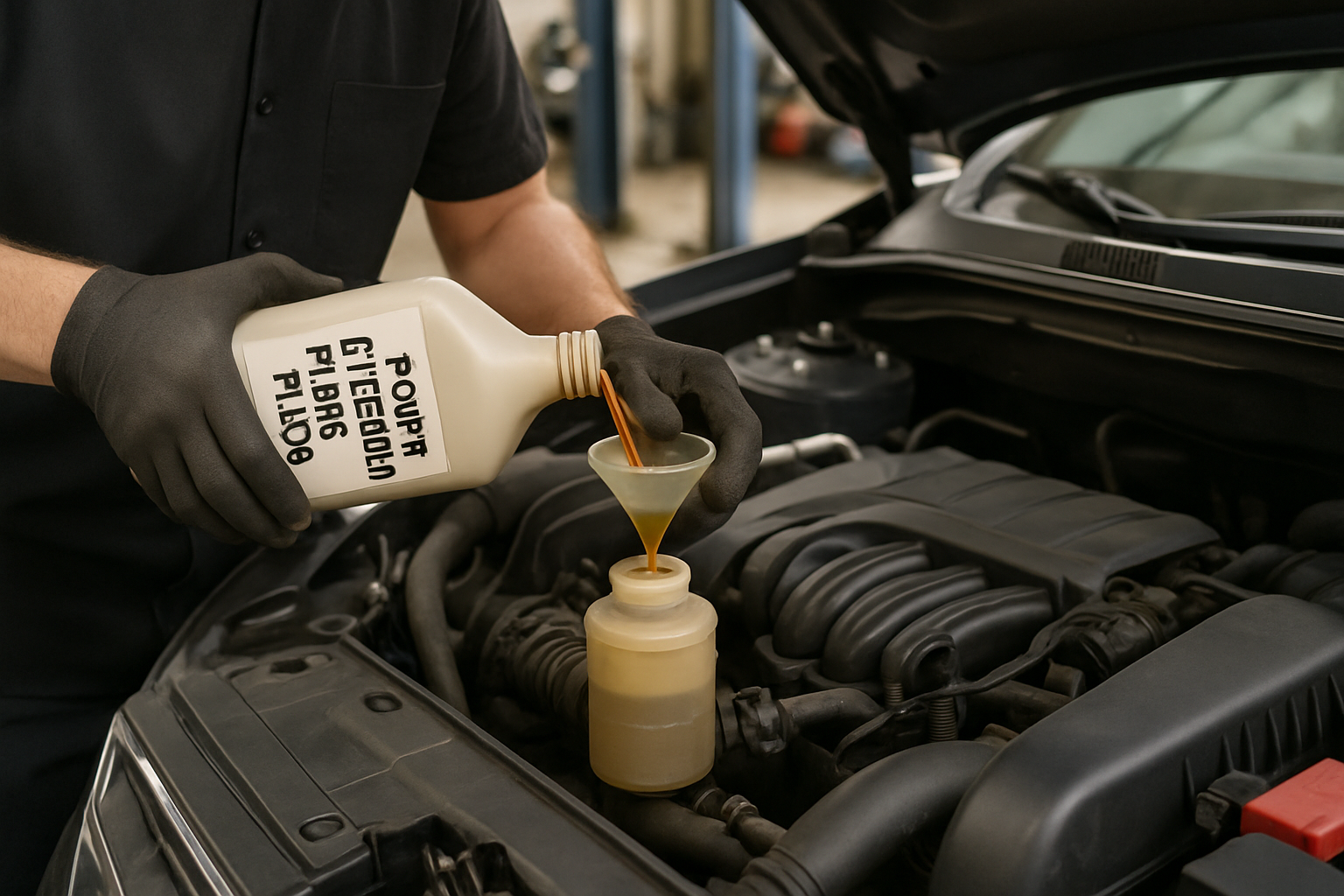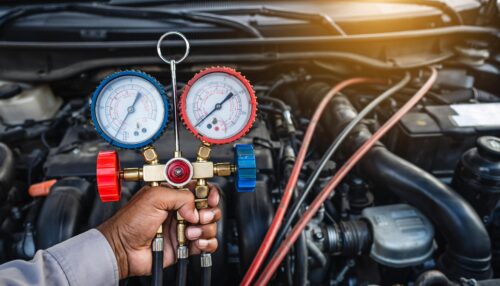
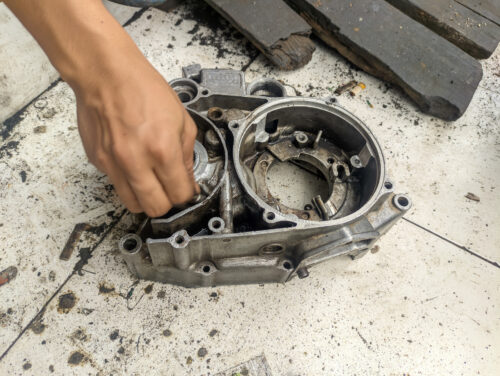
A Volkswagen owner pops the hood in a Milpitas grocery store parking lot and stares at a coolant reservoir that’s low again for the third time this month. There’s no puddle visible on the pavement anywhere under the car. There’s no steam curling out from the tailpipe during warm-up either. The temperature gauge has been reading normal every single time they drive the car. So what could possibly be eating the coolant week after week? If you drive a 2008 or newer GTI, Jetta, Tiguan, Passat, or CC with the 2.0T EA888 engine, Fremont Foreign Auto in Fremont, CA has seen this exact scene enough times to answer the question with confidence.
Can Coolant Loss Alone Accuse The Water Pump?
Yes, and the diagnostic logic on these engines is more specific than most drivers would guess. Volkswagen built the water pump and thermostat housing as one integrated plastic assembly, and that assembly fails in three separate patterns we see regularly. Two of those patterns leak coolant you’ll never spot on the driveway because the coolant hits a hot engine surface and boils off before it can drip. The third pattern is the worst of the three because it doesn’t leak at all, and that’s the one most likely to strand a driver on I-880 during a hot afternoon.
Pattern One: The Weeping Housing
Hairline cracks form along the plastic housing after years of heat cycles, and coolant seeps out slowly onto the block below the pump. The block stays hot for hours after any drive, the coolant cooks off as it touches the metal, and you’ll smell a faint sweetness the next time you open the hood. A white mineral crust builds up along the timing cover seam because the minerals in the coolant stay behind after the water evaporates. That crust is the first honest clue that the pump itself is the source of the loss.
Pattern Two: The Shaft Seal Weep
The shaft where the pulley drives the impeller has a seal that hardens with age and starts weeping coolant onto the timing belt cover. The hot surface burns off the evidence before you’d ever see a drop of it on the ground below. Techs who work on these engines look for a dull stain pattern radiating out from the weep hole on the front of the pump, and once you recognize that stain, you won’t unsee it on the next EA888 you inspect. The stain looks like a faded halo rather than a wet drip, because the leak rate is slow enough that each drop dries before the next one arrives.
Pattern Three: The Impeller That Isn’t There
This is the dangerous failure mode because the symptoms are almost invisible from the driver’s seat. The original plastic impeller can shear off its shaft and leave the shaft spinning freely while the pump moves almost no coolant. The temperature gauge reads normal because what little flow remains passes the temp sensor at a reasonable reading, but the head soaks up heat that isn’t being carried away. Volkswagen revised the design to a metal impeller for a reason, and that updated revision is the only one we’ll install.
Book The Pressure Test Before The Top-Off Becomes A Tow
If your reservoir keeps dropping and the ground stays dry, Fremont Foreign Auto at (510) 793-6067 will pressure test the cooling system, inspect every housing seam, and tell you whether the pump is hiding the leak or broadcasting it.